Showing posts with label bugleweed. Show all posts

Friday, May 16, 2014

The Cottage Garden, Year 2

 One of the very first projects I worked on in my garden was ripping out the bushes in front of my house and creating cottage-garden-style beds. Last year I mainly worked on the bed to the east side of my front door, which you can read all about here. That bed looked beautiful in the spring, but I discovered in the summer that the late afternoon sun was settling on my 'Twist-N-Shout' hydrangea and burning it to a crisp. I also discovered that I had poorly planned for winter, and that bed looked positively naked in January. My solution was to move the hydrangea to a shadier spot and replace it with a rosemary I've grown from a cutting. That spot might be too wet for rosemary (the surrounding plants need a lot of water), but since the plant is free I don't mind experimenting.

The first cottage garden bed from year 1 (above) to year 2
(below).

Everything else in that bed has pretty much doubled in size. The irises are currently covered in blooms and flopping all over the place. The climbing hydrangea has almost covered the trellis, and the lemon balm and bugleweed are competing for space.

Clockwise from top left: foxglove with iris, lemon balm with
bugleweed, hydrangea, and rosemary.

 This spring I finished filling the bed on the other side of the front door with plants. Much less planning went into this one than the last one. I just couldn't make up my mind, so I kept sticking plants I liked in there until I was done. It's a mix of plants from the first bed, other freebies, and a few impulse purchases. I played a lot with textures in this bed. I'll probably rearrange it next year after I see how all the plants do this year.

The new cottage garden bed 
Clockwise from top left: pink 'Flower Carpet' rose,
'Barbecue' rosemary with 'Silver Mound' artemisia,
hydrangea, iris with lemon balm.
In addition to the plants pictured above, I added some summer-blooming perennials which I'll add pictures of when they bloom later: 'Robert Poore' summer phlox and 'Summer Berries' yarrow. I like the appeal of different plants coming into bloom at different times, so those should give me something to look forward to during the heat of summer.

Feel free to leave a comment below if you have any questions!

Friday, April 26, 2013

The Cottage Garden Begins

Well, it's been quite a week in the garden. Two of my roses started blooming, I've planted a bunch of new things, and two young deer (an unexpected garden "pest") seem to have taken up residence in the neighborhood. Fortunately, they've mostly stuck to eating the weeds in our backyard. They did start nibbling on the beans, though, so we'll be building a cage for the vegetable garden this weekend.

'Knock Out' Rose, and a climbing rose I can't identify.

Yes, that's a deer frolicking in my backyard.

When we bought our home last summer, I decided our quirky little Tudor Revival cottage needed a cottage garden in the front to match.  At the time, Indian Hawthorne shrubs were planted across the front of the house. Indian Hawthorne is the kind of shrub that's planted on roadsides and around apartment complexes because it's hard to kill. It gets nice flowers, but I get so tired of seeing it everywhere--it had to go. I decided to start with the area to the east side of my front door, probably because it was the biggest challenge. It gets shade most of the day, and most beautiful flowering perennials and annuals like a lot of sunshine. But I would find a way.

Front of house, summer 2012
So I started doing my research. I researched what makes a cottage garden. I poured through my plant books, cross-referenced my findings online, and made a list of cottage-garden-style plants that would tolerate shade. From there, I narrowed it down to a few that I liked the best and would look good together, and I drew a loose diagram of my bed to figure out spacing and how many plants I needed.

Then came the real work. We tore out the shrubs and prepared the beds last October. I planted a few things my friends had given me--hostas, irises, and bugleweed. I divided up my lemon balm and planted part of it in the new bed. I found a good deal on a hydrangea that needed some TLC. I added some pansies for a splash of color. I fertilized everything to help it get established.

And then I waited. Most of the plants on my list wouldn't be available until spring, and even the plants I had wouldn't really fill in for a while. Most everything went dormant.

Spring came, everything has flushed out with new growth, and I found the plants I was looking for...and then some. I just finished planting everything this week, and mulched it to keep in moisture and prevent weeds. Here's the final product:


Of course, it's not really final. The hostas and bugleweed will spread more. One of my hydrangeas is only six inches tall right now--it was from one of the cuttings I took last fall. It will eventually grow to about four feet tall and wide. My spindly little climbing hydrangea will eventually cover that trellis and then some. Some things will start blooming, some things will stop blooming. After the summer I will assess what died (if anything), or what just needs to be moved to a different spot, and I might try some new plants. It will always be a work in progress.

For reference, here's my plant list (roughly left to right):
Hosta spp.
Foxglove (Digitalis purpurea)
Iris spp. (I have no idea what kind--my friend dug it out of her garden for me, and I haven't seen it bloom yet)
Columbine (Aquilegia caerulea 'Origami Mix')
Endless Summer Twist n' Shout Bigleaf Hydrangea (Hydrangea macrophylla 'PIIHM-I')
Climbing hydrangea (Hydrangea anomola petiolaris)
Coleus (Solenostemon hybrid--I don't know which one)
Hydrangea (Hydrangea macrophylla)
Wishbone flower (Torenia hybrid)
Bugleweed (Ajuga reptans 'Purpurea')
Lemon balm (Melissa officinalis)

Happy gardening!

Friday, April 19, 2013

Flowers Anyone Can Grow

My garden is chugging along. The radishes have sprouted, the onions are putting out shoots, and my bugleweed (Ajuga reptans 'Purpurea') started blooming (and spreading) this week. The bugleweed came to me as a clump that some friends gave me out of their garden, and it seems to have established itself splendidly.

My bugleweed has little blue-purple flowers.
 Not only are the plants I planted doing well, but I also have some volunteers! My compost pile hasn't given me any compost yet, but it has a handsome tomato seedling growing out of the side.

A 6-in. tomato seedling is growing out of my
compost pile.

I have friends that keep insisting that they kill everything they try to grow. Well, I'm here to turn anyone who wants to be a gardener into a gardener. I posted last month on the 5 Things "Green Thumbs" Know, and went into more detail about how to put some magic in your dirt and how to plant a plant. I'll talk about how to water your plants soon, but I thought maybe my good readers would like a list of a few flowering plants that aren't too difficult to grow--to increase your chances of gardening success here in the hot, humid South.
.
Before you figure out which plants you can grow, the first question you need to answer is how much sunlight you have. There are roughly 3 categories: full sun, part sun, and full shade. Plants that prefer full sun need direct sunlight almost all day--8 hours or more. Plants that like part sun like to be shaded half the day--only like 4-6 hours of direct sunlight. Part sun areas also include areas that get light shade all of the day--like under a pine tree where plenty of sunlight comes through the trees. Plants that like full shade don't need any direct sunlight. If you look at the label on any plant at Home Depot or Lowe's, you'll see a little symbol that tells you how much sunlight that plant prefers. If you're at a local garden center, they don't always have those commercial labels, but the people who work there will be happy to tell you what the plants need.

The universal symbols for the sunlight needs of a plant.

Here in the South, those recommendations aren't set in stone. Sometimes plants that prefer full sun in cooler climates will benefit from afternoon shade here in the heat of summer. They won't bloom as much as they would in full sun, but they might survive July and August!

One more thing before you run out to your garden center--make sure to pick plants that look healthy and don't have too many flowers. While your instinct may tell you to pick the most beautiful plant, a plant with mostly buds and only 1 or 2 flowers will adjust better to its new home than one that's covered in blooms.

And now...drumroll please...The List:

Full Sun
Daylilies (Hemerocallis hybrids)*
Lantana (Lantana hybrids)
Knock Out roses (Rosa 'Knock Out')
Gardenia (Gardenia jasminoides)
Butterfly bush (Buddleia davidii)
Verbena (Verbena species and hybrids)
Annual vinca/Madagascar periwinkle (Catharanthus roseus)
Rosemary (Rosmarinus officinalis)
Gaura (Gaura lindheimerii)
Lily-of-the-Nile (Agapanthus species and hybrids)
Moss rose (Portulaca grandiflora)

Part sun
Everything in the full sun list can tolerate part sun, they just might not grow as big or bloom as much.
Hydrangea (Hydrangea macrophylla)
Camellia (Camellia japonica or Camellia sasanqua)
Azalea (Rhodendron hybrids)
Geranium (Pelargonium hybrids)
Begonia (Begonia hybrids)

Full shade
Plantain lily (Hosta hybrids)
Periwinkle (vine) (Vinca major or Vinca minor)
Bugleweed (Ajuga reptans)
Coral bells (Heuchera species and hybrids)

*The words in parantheses are the scientific name for the plant. Since common names can sometimes be confusing--a plant can have more than one common name, or two plants can have the same common name--the scientific name will help you know you're getting exactly what you're looking for.

Are you a novice gardener? Do you have any questions for me?

Monday, December 3, 2012

Fall planting

Most people get planting fever in springtime or late winter, when the first warm days arrive after the long months of cold. In Middle Georgia, though, where spring is short and summer is long, many plants are happier being planted in the fall. By planting in fall, the plants have many months to grow strong and healthy before the grueling summer hits. Even in December, a heavy frost is still unlikely for a while. (For example, the highs have been in the 70s this week!)

Unfortunately, plants are harder to find in the fall. I went hunting at my local garden centers, and the particular perennials I was looking for simply were not available. You can usually get some good deals on shrubs that need a little TLC, though. Last fall I purchased a camellia & a rose at half-price. This year I got a similar deal on a 'Twist-n-Shout' hydrangea. Unlike most hydrangeas which only bloom for a couple of weeks out of the year, this variety is supposed to bloom all summer. Mine still had a bloom on it when I planted it in October.


Endless Summer® Twist-n-Shout® Bigleaf Hydrangea
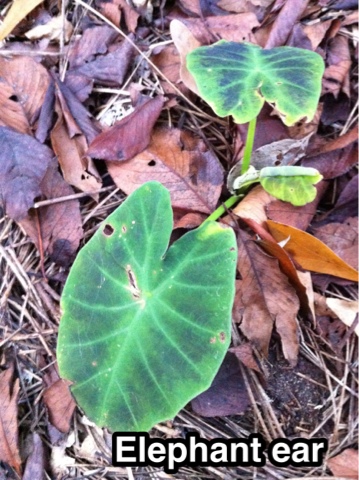
Even though I didn't buy much, I still had plenty to plant! The same friends that gave me cuttings from their yard also dug up/divided many of their self-propagating plants, including irises, bugleweed (Ajuga reptans 'Bronze Beauty'), hostas, elephant ear, and ferns. I planted in October and early November, and they all put out new growth before the cold slowed them down (as you can see in the pictures below). I also divided some lemon balm (Melissa officinalis) which was a gift from a previous year.  I can't wait for them all to take off when the warm weather returns in full force in the spring! (Maybe then I can figure out exactly what species/varieties I have.)


Happy gardening!