Showing posts with label spring. Show all posts

Thursday, May 7, 2020

Back to the Cottage Garden

While I've spent a lot of time on my vegetables this spring, the thing that really got me into gardening was the ornamental part of gardening. I love the beauty of gardens--from the flowers to the shrubs.

If you read some of my old posts, you'll see I spent a lot of time planting shrubs and perennials during those first couple of years in our house. I wanted a cottage garden look fitting of our English-style cottage. Since they come back year after year, they don't need quite as much attention as the vegetables, but they still need upkeep from time to time.

I spent much of my last two weekends working on some of the flower beds. I started on the rose bed in the very front. I planted two lavender plants there back in 2013. One of them died last year (or so I thought), so I bought another one. When I started cleaning out that bed though, I found that the lavender plant had started growing back from the nub that was left. I planted he new one in there anyways, hoping to fill out the bed a little more in between the two.

I thought this lavender plant was dead, and cut it back to a nub. It rewarded me with new growth this spring. Now I just need to keep the oregano from taking over.

I tucked the lavender plant I just bought back between the two old lavenders.

A side note about lavender. French lavender is notoriously hard to grow in most of the Southeast. It doesn't like our heat and humidity. If anyone wants to grow lavender here in Georgia, I recommend Spanish lavender--it tolerates the humidity much better. But I liked the look of French lavender better, and somehow, seven years later, it's still alive. I swear I found the right variety and the right location. I bought 'Munstead,' a dwarf lavender variety, from my favorite local nursery. I planted it against a retaining wall along the sidewalk, so it gets plenty of sunshine, good air circulation, and good drainage. The other secret: I water it as little as possible. Most of what it gets is rainfall and whatever runs down the hill. During the hot summer months, I'll water on particularly dry weeks. Somehow that formula has worked.

Lavender with the roses
In my garden I mostly tend to stick to perennials and shrubs, since they're a gift that keeps on giving. However I have a couple of spots in the front where I'll rotate through annual flowers to get an extra splash of color, and I'll usually plant a few in pots, as well. For this summer, I decided on lime green coleus, white fan flower, and this Calibrachoa whose color I just couldn't resist.


'Colorblaze Lime Time' Coleus

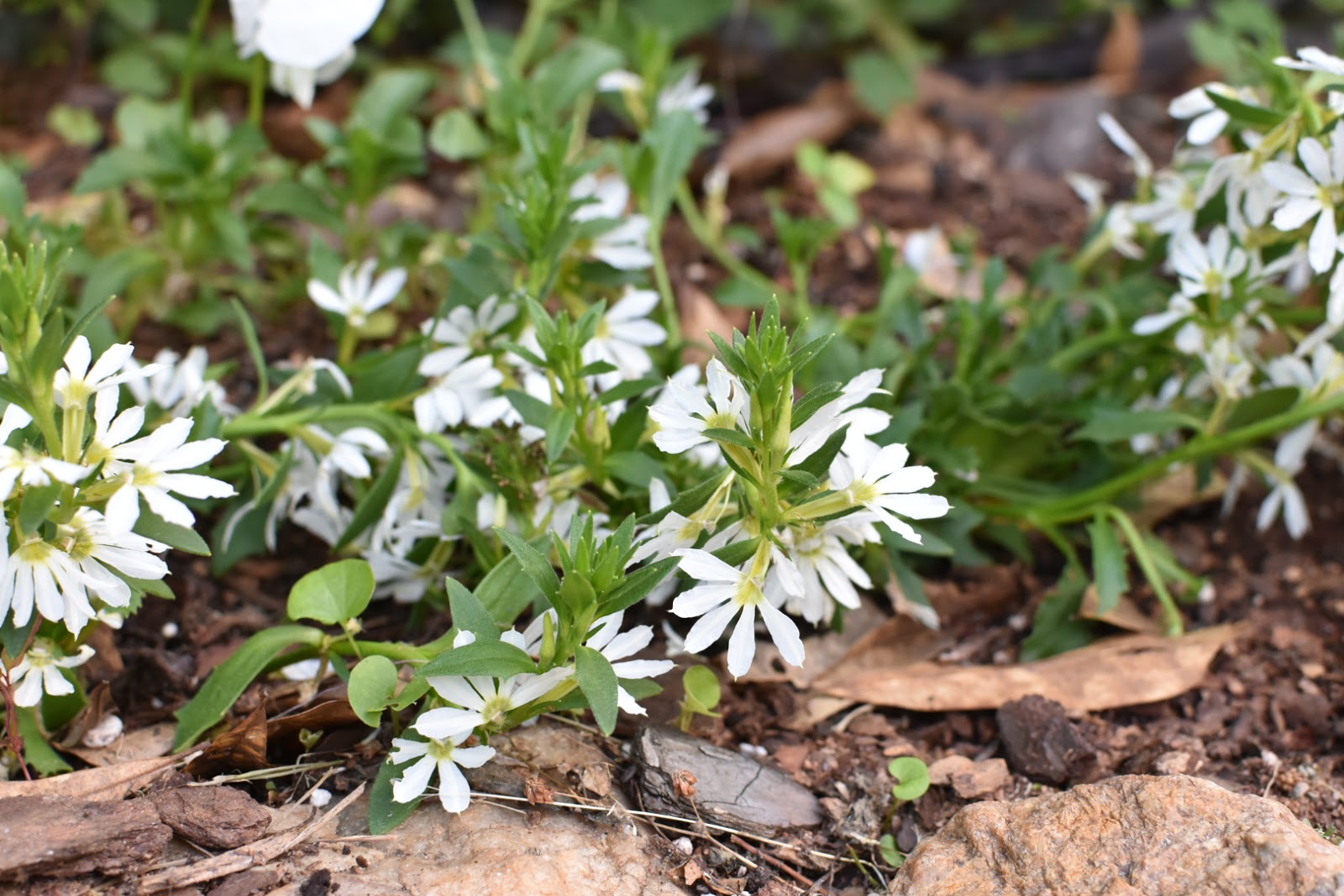
'Whirlwind White' Scaevola - also known as fan flower. I liked the upright growth habit of this hybrid.

'Superbells Holy Moly!' Calibrachoa
I find it hard to find flowers that will stay beautiful through our scorching summers, but I had good experience with coleus and fan flower in the past. Both manage to still look healthy in July and August. The calibrachoa was more of a toss up. Fingers crossed that it makes it. I also changed out one of my planters with a coleus and fan flower, plus this fuschia ivy leaf geranium I loved. Maybe it's because I spent so much time in Florida's Palm Beaches, but I think lime green and hot pink is a great summer color combination.


It's going to be good year for my roses. I never got around to giving them their annual pruning or fertilizer, but they look as happy as can be at the moment. I think it was because of all the rain we got this winter/spring. They just soaked it up and gave them a nice healthy start to the year. Even when plants look dormant, they're still "growing," it just looks different.

'Soaring Spirits' is looking particularly healthy this year.
Well, my work on the flower beds is far from over, so more on that soon!

Monday, April 13, 2020

Planting complete...for now

In spite of the pollen trying to kill me, I finally finished planting my vegetable beds over the past two weekends.

Left to right: tomatoes, potatoes, bell peppers, asparagus


The first weekend, all I had the energy for was to plant one lone zucchini plant (it's there next to the strawberry plant in front of the beans). I fortified my defenses against the allergies and planted the bell pepper plants a few days later. This past weekend I planted the tomatoes and two more rows of beans.

By the way, I know the wood around our raised beds is kind of falling apart, please don't judge. We had grand plans to redo them and make them sturdier this year, but that was before we had to limit our shopping trips and stay home due to a pandemic. So this year's motto is reuse and make do. The plants don't mind and still grow just fine.

The potatoes I planted in the ground finally got tall enough for me to cover them up--which meant I could move the pile of dirt back into the potato row, making room to plant the tomatoes.


The potatoes had gotten quite weedy--I must have established my beds at the perfect time for all that weed grass seed to sprout--but it was okay since I was going to be piling six inches of soil on top of the weeds. Potatoes live, weeds die. Problem solved!


I planted two varieties of tomatoes. I kind of lost my mind when I went plant shopping this year. I planted two of a cherry tomato variety called 'Sweet Million' that I've pretty sure I've grown in the past. The upside of cherry tomatoes is that they're very prolific and seem to get very few diseases or pests. The downside is that the plants get HUGE. If you had something tall enough for them to climb, they would get nine feet tall. I planted them on the ends of the row so they would have more room to spread out, and planted two 'Cherokee Purple' tomatoes in between. The upside of Cherokee Purple tomatoes (an heirloom variety) is that they are DELICIOUS. I love all fresh tomatoes, but Cherokee Purple is probably my current favorite for flavor. The downside is that they tend to get diseases and insects in my garden, so I don't get to harvest very many. Hopefully the two varieties will balance each other out.


My beans sprouted this past week! They like all the rain we've been getting. It's easy to tell the two varieties apart--the purple bush beans, 'Royal Burgundy', have purple stems, while the yellow bush bean plants are completely green.


The radishes are getting bigger! They've graduated from little tiny seedlings to have real leaves. So far, so good.


I picked my first strawberry of spring. It was tiny but full of flavor!


One flower coming into bloom this week: my 'Sunset Cutie' gaillardia that I planted last spring. This perennial seems to bloom all the way from April to December here in Georgia. It's drought tolerant and attracts butterflies, so it's a winner in my garden.

Wednesday, April 1, 2020

When Change is Good

Sometimes people are surprised to learn that I don't like change. Change is hard. And there have been a lot of changes to my life that are out of my control these past couple of weeks.

My garden, though, is a wonderful reminder that change doesn't have to be bad. During this time of year, my garden is changing constantly! I take daily walks to see what has sprouted, grown, or bloomed.

Like these potatoes. On the one hand, the potatoes in the ground still look like a pile of dirt. Fortunately, though, I planted some in a grow bag a week earlier, and they're giving me a run for my money. You would not believe how fast the plants are growing! I already need to cover them up with more soil.


Aaaaand, my asparagus crowns started sprouting! Isn't baby asparagus amazing and adorable?

First asparagus sprout

Asparagus sprout a few days later. That's what happens to asparagus if you don't pick it and eat it.
The radish seeds I planted last Monday emerged within a few days. They're looking quite healthy. If you like radishes and instant gratification, I highly recommend growing them. But if you live in Georgia plant them today. They don't like the heat. And be prepared to water them constantly. I didn't have a spot in my garden planned for them, but they don't take up much space. I just pulled up a small patch of weeds next to my lemon verbena and planted them there. In theory I should have radishes by the end of April.


Some of my flowers also came back into bloom this week.


Over the weekend I prepped my second veggie bed and planted bush beans. I chose a purple variety ('Royal Burgundy') and a yellow variety ('Goldilocks') because those have generally been more prolific for me than regular green bush beans. And they're prettier. A couple of years ago I had grand plans for a strawberry bed there, but most of the plants died (I learned a lot about growing strawberries in the process, though.) So that's why there's one lone strawberry plant in the middle of the bed. I didn't want to disturb it.


Fortunately it's not freezing this week, but we are getting one last cold snap before the warm weather is here to stay. After we start getting more consistent warm weather, then I'll plant my other heat-loving veggies like tomatoes and peppers.

Tuesday, March 24, 2020

Return of the Garden on Boulevard

I can't believe it's been almost 6 years since I last updated my blog! Like many people this spring, I decided to plant a big vegetable garden. I plant veggies every year, but I planted hardly any last year. Current events, however, gave me the motivation I needed to plant lots of veggies and try new things. I may regret all of it when the heat of summer hits, we'll see...

With the new gardening enthusiasm, I wanted to return to my blog for the same reasons I started it:

  • to keep a journal of what I did and what worked (and what didn't) that I can refer to later
  • to assist other gardeners looking for examples or advice.
So, back to the garden. I've always wanted to grow potatoes, and I decided this was the year to finally try it. The local hardware store had seed potatoes, and one of my favorite kinds at that: 'Yukon Gold.' Asparagus was also on my gardening bucket list, so while I was there I bought a bag of asparagus crowns purely on impulse. You only live once.

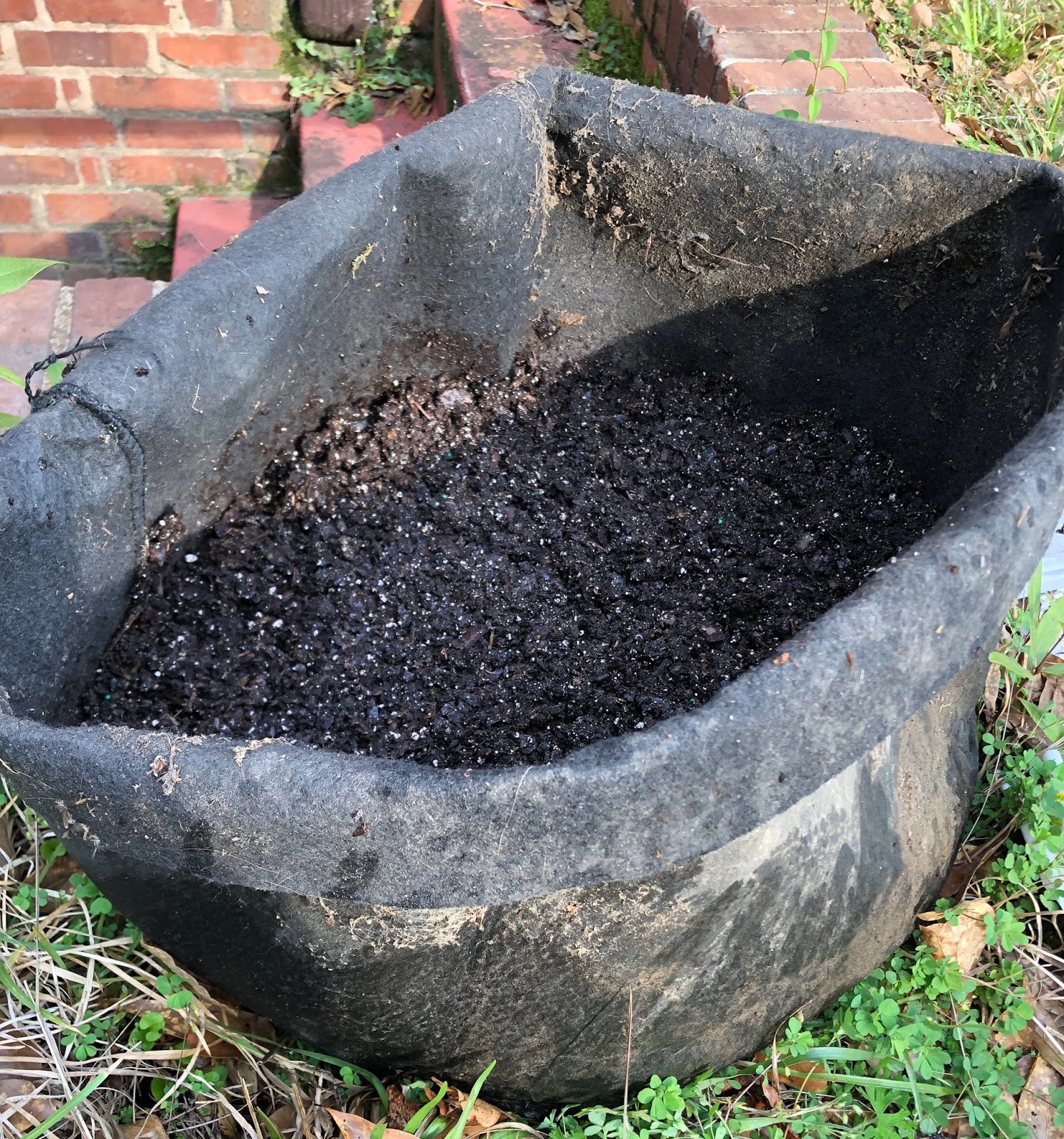
My research told me I needed a little over 3 lbs of seed potatoes to feed my husband and I, so a 5 lb bag seemed perfect. I cut up a couple into large pieces, making sure each piece had at least one healthy looking eye--these eyes already had nice little green buds coming out of them. I told a friend of my plans, and she gave me her potato grow bag from Gardeners Supply that she wasn't using. I read the directions online, and the first 5 pieces went into the grow bag with whatever leftover potting soil I had around and a handful of fertilizer (potatoes like a lot of fertilizer). I planted the potatoes shallow, but as they sprout I'll cover them up with a little more soil bit by bit until the bag is full.


The rest of the potatoes were going in the ground with the asparagus--a much bigger ordeal.

I mostly use the Square Foot Gardening method developed by Mel Bartholomew. I've been fond of it since I got my grandfather's copy of the original book from the 1980s. But over the years I've learned to adapt it to my own preferences and to our Georgia climate. I had a 4' x 4' bed that I put in a few years back with "Mel's mix," but it was covered in weeds and one giant ant hill from a winter of neglect. After clearing out the uninvited guests, I enriched it with a couple of bucket fulls of compost from my compost pile and a bag of composted cow manure. It took a couple of hours to prepare the bed, but good soil preparation is always worth it.


After that, I started with the easy part first--planting the asparagus crowns. I bought 2-year crowns, and it takes 3 years for asparagus to mature before you can harvest it. That means I can harvest my first asparagus...some time NEXT spring. Gardening isn't always about instant gratification.

Cute little baby asparagus!

Spreading the roots out before I cover them up

After planting. There are asparagus plants in there, I promise.

Then for the potatoes. I cut them into pieces like before, and let them rest a day before planting to heel over (a recommendation I read online).


Potatoes like to be planted deep with lots of loose soil for them to form nice fat potatoes in. My raised bed was more shallow with heavy clay soil underneath. You can also compensate with some mounding later, but I didn't want to have to do too much of that, either. So I found the middle ground. I dug a nice deep trench 12" wide and maybe 9" deep. As I moved the soil aside, some of the clay at the bottom of the trench got mixed in with the enriched soil from the top of the bed. Then I pushed some of the loosened dirt back into the trench to make a resting place for my potatoes, and spaced the pieces out as needed.


After that, I took some more of the loosened soil and just covered the potatoes, followed by some organic fertilizer. The rain did me a favor and watered it in for me that evening.

There are potatoes in there, I promise.
 Since the trench wasn't filled in all the way, I'll do the same thing I did with the grow bag, fill in the trench more after the potatoes sprout, and maybe end up mounding some soil if needed.

I finished planting those a couple of days ago. We've had frequent rain and mild temperatures since then, so the asparagus and potatoes should be off to a good start. I'll post some progress photos later.


Thursday, April 3, 2014

My Spring Garden Tour

This is just one of those weeks in my garden that I want to capture forever, a rare day when everything seems to be blooming all at once. The plants that bloom in early spring are still in bloom, and the ones that bloom in mid to late spring are just coming into bloom. The camellias are still hanging on, while the bulbs are popping up, and leaves are emerging everywhere. I took some time today to take pictures, in the hopes of preserving the memory, and I thought I'd share them with you.

Flowering cherry tree

Flowering cherry tree
My cherry tree has been in bloom for a couple of weeks now, and I swear it's even more beautiful this year than it was last year. The first picture is actually from last week, when it was at its peak of blooming in all its white glory. The second photo is from today, when the leaves have started emerging, the blooms have turned from white to pink, and the petals have begun to fall like pink snow.

Muscari armeniacum (grape hyacinth) &
Hyacinthus 'Delft Blue'
I picked up a mixed bag of hyacinths at the hardware store in December (you can usually find bulbs on sale around that time). The little ones emerged first, and the bigger ones are just starting to pop out. And yes, I am a little behind on my weeding in my flower beds. I'll get to that eventually...

Tulipa 'Happy Generation'

Tulipa 'Bastogne'

The striped tulip ('Happy Generation') is left over from a container planting I did last year. I didn't think they'd do so well two years in a row, since I didn't make any special effort to store them properly. I actually left one of them lying on the patio all summer; I only stuck it in the ground in the fall because shoots were coming out of it. Apparently they're more tolerant of abuse than I realized! I picked up a bag of red tulips in December, and this is the first one that's bloomed.

Verbena 'Homestead Purple' flower among rose leaves
I found a stray purple verbena bloom popping out from among the roses.

Gelsemium sempervirens (left) and Vinca major (right)

Carolina jessamine (Gelsemium sempervirens) grows in large planters on either side of my front door. It doesn't have as many blooms since I moved it to the shadier location, but it still has a couple this year. Periwinkle (Vinca major) grows entangled in a bed of ivy and honeysuckle alongside my patio. It makes a lovely groundcover, especially for shady areas, but it can become invasive in wooded areas in the South. Vinca minor is its smaller, less aggressive cousin, which is usually a better choice for the garden.

Hosta hybrid
It's so nice to see my hostas returning from their winter sleep next to my patio.


I haven't planted any vegetables yet this year, but I still have some lettuce hanging on from last fall. I'll get to work planting my summer veggie garden here in a couple of weeks.

Cornus florida (dogwood)
I actually climbed up into my dogwood tree in order to get a better view of the blossoms. They really are one of my favorite spring flowers. In addition, the trees grow to a nice, small-to-medium size and get some lovely color in the fall. In my opinion, no Southern garden is complete without a dogwood tree.


From the dogwood tree, I had a birds-eye view of my kitchen garden. As you can see, I've added quite a few raised beds recently. I'll update you soon on all the new developments in my kitchen garden.

Monday, March 24, 2014

A Pink Container Garden for the Pinkest Party


Here in Macon, GA, we're in the middle of the Cherry Blossom Festival. For those of you who don't know Macon, the Cherry Blossom Festival is a big deal. Their slogan is, "The Pinkest Party on Earth," and that might be accurate. Not only is the 10-day festival full of events such as concerts and parades, but you'll see almost everyone wearing pink. People even dye their dogs pink for the festival!

The cherry trees came through in full force this year, in perfect timing for the festival. The cherry tree in my backyard is looking its finest, as well. I decided in honor of the festival, and to celebrate the arrival of spring, I wanted a pink container garden for my patio. It didn't take long to run to Lowe's and put one together this weekend.


I picked three plants that I thought would give me the most bang for my buck: armeria, phlox, and petunias.

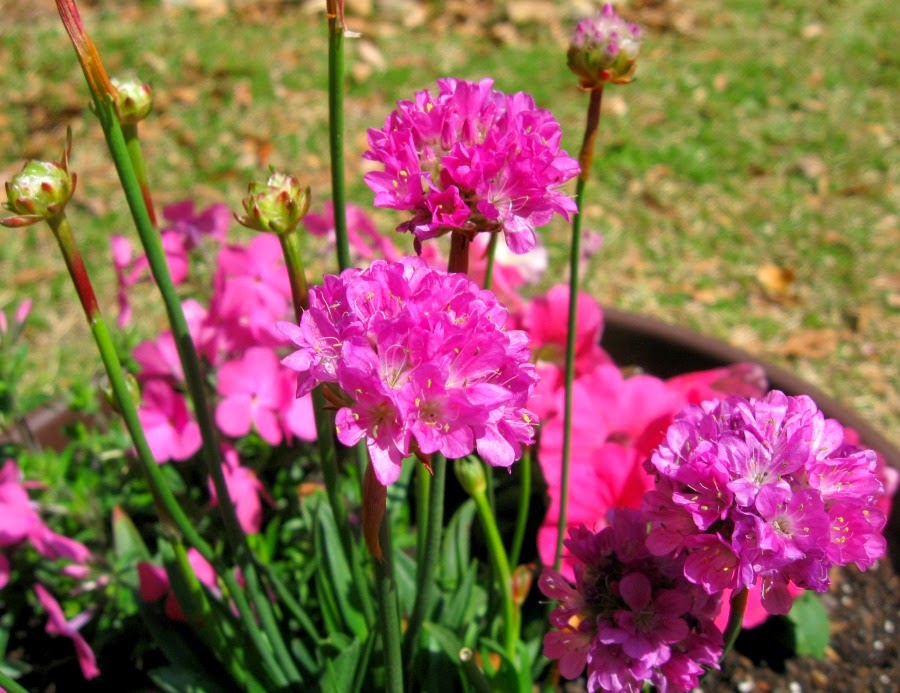
Armeria
Armeria is also known as thrift or sea pink. This perennial blooms spring and early summer, and can also be found in white or red. If you didn't guess from the name, it's native to coastal areas. It likes full sun and well-drained soil and is fairly drought tolerant. Even when it stops blooming, I think its grass-like foliage will be lovely in this container.

Phlox
There are several different species of phlox, but I loved the large blooms on this one. It's also a perennial, like armeria. It only blooms in spring, but I can plant it in my garden when it's done blooming. It likes full sun and regular water.

Petunia
When the phlox stops blooming, the petunias will fill in. These annuals are easy to grow, grow fast, and bloom all summer. They do best with regular water, but they'll survive a little neglect. I expect to see them spilling over the sides of my container in June. They don't tolerate frost, but I don't mind dragging the pot inside if we get a couple more frosty nights.

Happy gardening!