Friday, March 15, 2013

5 Things "Green Thumbs" Know

People always tell me, "I have a brown thumb" or "my grandfather had a green thumb." I actually don't like those terms at all. It makes it sound like gardening is a magical talent--either you're born with it, or you're not. Gardening is really a learned skill. I can grow things because I've spent a long time learning about and practicing gardening (and your grandfather probably spent many years gardening, too). If you consider yourself a brown thumb, I'll give you a head start by sharing with you the basic gardening principles I've learned in the last 20 years. I realize I'm touching on a lot of concepts that may be unfamiliar if you have no previous gardening knowledge. I'll go more in-depth on these in later posts.

1. Location, location, location. Otherwise known as "the right plant in the right place", this principle refers to the fact that different plants have different requirements. If you ignore these requirements, your plant will under-perform at best, or die at worst. Sure, I'll push the boundaries sometimes, but I don't plant something in a place that obviously won't give that plant what it needs. What do plants need? The right amount of sun, the right amount of water, and the right temperatures. Read your plant labels. If you want to branch out a little, pick up a good plant book. (The Southern Living Garden Book is my go-to).

2. The magic is in the dirt. Half of a plant (sometimes more) is underground. If you have bad soil, your plant will never be happy. Good soil gives your plant the right amount of water and nutrients. You can do a lot to improve your soil. I'll dedicate a post to this soon. If your garden consists of what you can grow on your patio or balcony, then your answer is simple: buy good potting mix. I bought cheap potting mix once--it wasn't worth it.
Both of these pansy groupings are currently in my garden.
I prepared the soil before planting one of the groups,
can you tell which one?
3. There is such a thing as too much of a good thing. Water, fertilizer, and sunshine are all good things, but too much can kill plants if you're not careful. Too much fertilizer can fry any plant, too much sunshine can fry a shade-loving plant, and too much water can drown a plant (unless its native habitat is a wetland).

4. Sometimes plants die. A lot of gardening is trial and error. Despite your best efforts, occasionally plants die anyway--that doesn't make you a "brown thumb". It could be killed by disease, you might not have the right climate for it, or it might just give up for no real reason. I've killed a lot of plants in my life, too, but it's all part of the learning process. I don't have patience for plants I have to baby too much, either. If something dies despite reasonable effort, I just won't plant another one--it obviously wasn't a good fit for my garden.

5. Your local garden center is your best friend. By "local", I DON'T mean the closest Home Depot or Lowe's. I mean some place owned locally, and staffed by people who are gardeners themselves. Those people are treasures of information. They'll tell you how to take care of your plants in your climate. If you bring in a leaf with disease or insect pests, they can tell you what pesticides to use. Not to mention, a good garden center will only sell you high-quality plants that are suited to your climate.

Thursday, March 7, 2013

Spring is Almost Here!

Here in Middle Georgia, spring is just around the corner. Even though the highs over the last couple of days have been in the 50s (that's cold for us!), you can see signs of spring all around the neighborhood. Even in my own yard, there are a few flowers that started blooming in February. Those late-winter/early-spring blooms fill me with hope! Here are a couple currently in bloom:

Vinca major aka periwinkle

Gelsemium sempervirens aka Carolina jessamine

Of course, many of my plants are still dormant. My husband told me the other day that my hydrangea looked dead. I reassured him (and myself) that it was normal. The hostas look non-existent. As soon as spring comes, though, they will both burst forth with new leaves.

I can't wait to start planting. We have a very narrow window where the temperatures are right for planting. Too early, and they could accidentally be killed in a late frost. Too late, and they will simply wither away in the heat and humidity of our summers. I planted several things last fall with the hopes they would have plenty of time to get established, but there were several plants that simply weren't available at the garden centers in the fall. 

There are a few things you can plant in March: bareroot hardy perennials (not usually available at garden centers, but you can order these online), roses, shrubs, and trees. If you like vegetables, this is a good time to plant asparagus, lettuce, cabbage, onions, radishes, turnips, and carrots. Look at your seed packets for exact dates. They are based on your "last frost date" (the latest date a frost is expected to occur, on average). Here on the border between zone 7 and 8, our last frost date is April 9. Here's what not to plant right now: most of what you see at Lowe's & Home Depot. I saw tomato seedlings for sale last month! They must have thought they were in Florida.

Whether or not you are planting this month, it's a great month to prepare new flower beds. I did this last fall on one of my beds. I have a lot of compacted soil. Whether or not your soil is compacted like mine, most soil can be improved by some compost or other organic matter (such as aged manure). I sort of did a lazy version of "double digging". My husband and I broke up the soil real well to a depth of about 6 inches, pulled out rocks we came across,  and then hand-tilled (mixed) in some store-bought compost. Here's an action shot of my husband at work:


I recently talked about the benefits of soil preparation in a comment on another blog, Your Easy Garden, and  won some rose bushes for my tip! I can't wait to try out my new Flower Carpet roses. The bad news: I guess I need to prep some more beds for planting. What flowers are you enjoying in your garden this month?

Saturday, February 9, 2013

Dreaming of Spring...and New Flower Beds

I am really getting tired of winter. I can't wait to see everything I planted in the fall bloom and grow! I'm jealous of my neighbors with huge bulbs and saucer magnolias in bloom in their yards. I wish I had planned ahead in the fall and planted some bulbs for forcing indoors...I need to plan to do that this year. At least the snowdrops and vinca in my yard have started blooming. That was a pleasant surprise recently.

Snowdrops in my yard
The best thing to do this time of year is to plan ahead for spring's garden projects. One of my goals for spring is to transform one of the masses of boring hedges in front of my house into a flower bed. I decided shortly after I moved into my home that my Tudor Revival-style cottage needed cottage-garden style in the front yard. According to Wikipedia, "The cottage garden is a distinct style of garden that uses an informal design, traditional materials, dense plantings, and a mixture of ornamental and edible plants. English in origin, the cottage garden depends on grace and charm rather than grandeur and formal structure." Doesn't it sound perfect for my little English-inspired Tudor cottage? So I did a little Googling to get some cottage garden inspiration from the world-wide web.
Cottage garden picture from talesfromcarmel.com

Cottage garden picture from talesfromcarmel.com
The first two pictures are borrowed from the Jan. 5, 2012 post on the blog "Tales from Carmel". The pictures are both of the same garden--first in April, and second in August. You'll notice there are different things in bloom, but there is still plenty in bloom both in spring and late summer. I love how it's practically overflowing with plants: clematis, delphinium, hydrangeas, fuschia, salvia, poppies, viburnum, lilies, snapdragon, petunia, roses, and chrysanthemum. I have a stone walkway leading up from my driveway to my front door, and I dream of it being lined with an abundance of flowers on both sides like in this garden. Maybe one day. I notice, too, that the color scheme sticks to white, pinks, purples, and blues. Those are all colors that I like, and they blend so harmoniously here. It definitely has informal design and dense plantings--two of the criteria for a cottage garden.


Cottage garden from hgtv.com

Cottage garden from hgtv.com

These two pictures were borrowed from HGTV.com. I love the variety of textures, especially the spiky plants like iris, delphinium, and salvia. In both of them you'll notice the use of garden ornaments--in the first a birdbath, in the second an urn. Garden ornaments are very common in the modern cottage garden, and I think they give a sense of permanence and timelessness in a garden that changes weekly. The first one, especially, is a good use of traditional materials: brick walkways, a stone birdbath, terracotta pots, and an arching trellis. Something else I noticed in both is how they used plants to give structure and order to what is otherwise a very chaotic landscape. In the first, they use low boxwood hedges as an evergreen border. In the second, that perfect lawn, as well as the trees in the background, give consistency and calm.

Terry and Vanessa Winters' modern cottage garden
This image comes from an article in The Guardian about modern cottage garden style trends in the UK. They even have a list of suggested plants if you're curious. In this picture, they achieve order by repeating the same plant throughout the bed--in this case, alliums. I love alliums (those flowers that resemble white puff-balls--they also come in lavender and purple), and I hope to plant several of them.

This at least gives me a start for what I hope my next flower bed will look like. Next step: narrowing down my plant list!

Saturday, January 26, 2013

Winter Garden Maintenance

In my last post, I talked about resolving to spend time working in my garden every week--even if just for a few minutes. Well, there's not much going on in my garden right now, and there's probably not much going on in yours. The only things noticeably growing in my yard in this cold weather are the camellias and pansies. You might be wondering: what does one do in the garden in the winter time?

One of my neighbor's camellias that I
can see from my yard.
Well, to keep my pansies blooming, I'm feeding them with some all-purpose Miracle-Gro water-soluble fertilizer every couple of weeks. I brew it slightly on the weaker side just to safe in this cold weather--there is  such a thing as too much fertilizer. Better too little than too much. I also keep them deadheaded (pinching off the faded flowers) to keep them blooming. I water them occasionally, but it really depends on how the weather's been and how the soil feels. The weather has been really erratic this month--we had really warm weather a couple of weeks ago, followed by really cold weather, and raining off an on. I probably water them once a week on average to keep them from drying out. My little violas stopped blooming for a few weeks, so I took a closer look at them and discovered they were covered in aphids. I broke out an insecticidal soap I had and sprayed them down yesterday. Hopefully they will be covered in blooms again by next week.

I continue to build my compost pile, alternating kitchen scraps with leaf litter from my yard. I water it occasionally when it looks dry (it breaks down faster when it's damp). I don't turn it, though--turning it just slows it down this time of year by letting all the heat escape.

Cuttings on my windowsill
I held on to two of my cuttings that didn't root when the others did, but still looked healthy. One was a scented geranium and the other was a hydrangea. They're covered in roots now! Even though it took them probably twelve weeks to root (twice as long as the other scented geranium and hydrangea cuttings), I didn't mind them sitting in their pretty little glass containers on my windowsill while I waited. I finally got around to potting them up this weekend.

If you're looking for a garden project, it's not too late to plant pansies here in Middle Georgia. This past week I saw they still had plenty of 6-pack plugs of pansies at Home Depot, but I don't recommend planting those this late. Head out to your local garden center and look for pansies in individual pots--3" pots or larger. If you buy plugs, they will stop blooming for a few weeks while they try to put out roots in their new home, and who wants to wait another month to have flowers in your yard? The pansies in larger pots will already have enough roots to keep blooming happily until summer.

Tuesday, January 8, 2013

Garden Goals for 2013

Well, the excitement of the holidays is over and the dreary winter weather has fully set in.  While not much is going on in the garden, it's a good time of year for planning. After all, everyone has New Year's resolutions, so I am making garden resolutions for 2013.

1. Work in the garden once a week (even if just for a few minutes). Even when the weather's cold, the pansies still need to be watered from time to time, and branches need to be picked up after storms. In the heat of summer, it will take extra motivation to get out there to pull weeds, but my garden will thank me. Plus, working in the garden is therapeutic for me.

2. Propagate more shrubs. I was surprised this last year how fun and easy it was to root cuttings at home, and I have a lot of yard to fill. There are some gorgeous camellias growing on the border of my property, and I have a lot of shade in my yard (camellias like shade). They look so pretty this winter, I would love to spread the winter beauty to other corners of my yard. Also, I love the new hydrangea I bought this fall, so I thought I'd try to get a few more shrubs out of it to plant here and there.
The camellias in my garden brighten my day in the wintertime.
3. Finish the flower bed on the east side of our front door. I started this project this past fall, pulling out the existing shrubs, planning the layout, and planting what I could find. This spring, I hope to locate the rest of the flowers I want for it and show you the finished product!

4. Create a flower bed on the west side of our front door. After I see the results of the east bed (what dies, what thrives, how it looks after it fills in, how much trouble it is to maintain), I will have a better idea of what I want to do with the west bed. There are currently plain, boring, green shrubs there. I'd like to do something with a similar look and feel as the east bed, but not necessarily identical. After all, my house isn't symmetrical, so I don't think my garden should be, either.

5. Start a vegetable garden. I have never really done much vegetable gardening beyond growing a few things in pots. I have always dreamed of having a beautiful vegetable garden, though. When I was bored in high school I would doodle possible garden plans for my eventual white-picket-fence kitchen garden, complete with flowers lining the outside of the fence, herbs growing just inside the fence, and raised beds full of tomatoes, carrots, and squash. (When I was a kid we had a vegetable garden one year next to our white picket fence...maybe that's where I got the inspiration!) For 2013, I think I'll start small--maybe a 4' x 4' garden, just enough to grow a few vegetables for my husband and I.

My first experience with
vegetable gardening, age 7.

Wednesday, December 19, 2012

Winter Cheer

My experience so far in Middle Georgia has been that, even among the people that like to garden, most only garden in the summer time. The most popular garden plants are crapemyrtles, azaleas, petunias, and geraniums--all plants that bloom while it's warm outside. Being from South Florida, I don't care much for the cold, but I love the outdoors and can't imagine not spending at least a little time in my garden every week, if only to see what's in bloom. I make sure to plan my garden accordingly, so there's always some beauty to enjoy in my garden.

I used to love pansies until I moved to Georgia. You can't really grow pansies in South Florida, but here, they are all you see in commercial plantings from November to April. To make matters worse, people often use these pansy color mixes that combine bright colors at random like a bad '80s outfit. When I ran across some pansies in a lovely shade of red, though, the color was so pretty and so unusual, that I took home a six-pack to brighten up my beds. Maybe I'll have to re-evaluate my view of pansies.

I really love how violas spill out of a pot, so this year I filled up two small pots for my patio. I remembered planting bulbs among the pansies while working at Callaway Gardens, so I decided to try giving my violas an extra punch by planting some tulip bulbs first (tulips like to be planted at a depth that's three times the size of the bulb) and adding the violas on top. Tulips really prefer colder climates, but there are a couple of species that tolerate Macon's mild climate better than others. Of course, those were not the kinds of tulip bulbs they actually sold at Lowe's or Home Depot around here (I'll have to remember to order bulbs next fall), but at least the bulbs were half off when I bought them. Even if they don't emerge beautifully in the spring, at least I only spent a couple of dollars on my experiment.

I planted the tulip bulbs (left) under the violas (right).
Here's hoping they emerge as pretty as the picture!

I couldn't imagine our first Christmas in our house without a few lights outside and a wreath on the door. I thought I might be creative and make my own wreath this year, but in the end I decided to save time when I saw a lovely fresh wreath at Home Depot. With a mind on the budget, we kept our outdoor Christmas decorations simple, but I'm pleased with how it turned out.

Merry Christmas!

Monday, December 3, 2012

Fall planting

Most people get planting fever in springtime or late winter, when the first warm days arrive after the long months of cold. In Middle Georgia, though, where spring is short and summer is long, many plants are happier being planted in the fall. By planting in fall, the plants have many months to grow strong and healthy before the grueling summer hits. Even in December, a heavy frost is still unlikely for a while. (For example, the highs have been in the 70s this week!)

Unfortunately, plants are harder to find in the fall. I went hunting at my local garden centers, and the particular perennials I was looking for simply were not available. You can usually get some good deals on shrubs that need a little TLC, though. Last fall I purchased a camellia & a rose at half-price. This year I got a similar deal on a 'Twist-n-Shout' hydrangea. Unlike most hydrangeas which only bloom for a couple of weeks out of the year, this variety is supposed to bloom all summer. Mine still had a bloom on it when I planted it in October.


Endless Summer® Twist-n-Shout® Bigleaf Hydrangea
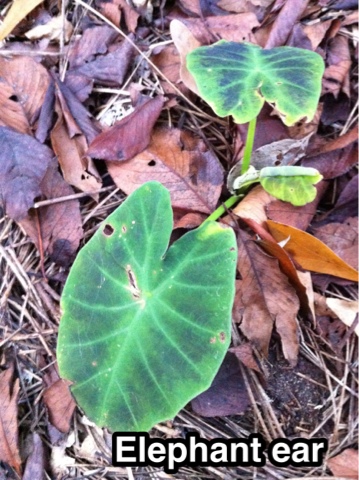
Even though I didn't buy much, I still had plenty to plant! The same friends that gave me cuttings from their yard also dug up/divided many of their self-propagating plants, including irises, bugleweed (Ajuga reptans 'Bronze Beauty'), hostas, elephant ear, and ferns. I planted in October and early November, and they all put out new growth before the cold slowed them down (as you can see in the pictures below). I also divided some lemon balm (Melissa officinalis) which was a gift from a previous year.  I can't wait for them all to take off when the warm weather returns in full force in the spring! (Maybe then I can figure out exactly what species/varieties I have.)


Happy gardening!