Saturday, June 6, 2020

Harvesting Potatoes

I was so excited to harvest my first potatoes this morning!

The successful treasure hunt was a much-needed mini adventure during a year with a little less traveling than normal.

I had never grown potatoes before, but I had always wanted to. When everyone was freaking out at the groceries stores back in March, it seemed like a good a time as any to cross it off my gardening bucket list. The first ones went into a grow bag a friend had given me.

Everyone thinks gardening requires some magical trait called a "green thumb," but I've found a green thumb is earned, not given. I read as much as I could about growing potatoes before planting them, but without any actual previous experience, I wasn't sure what to expect. My plants started off growing fast and getting huge. Then some storms came through, and the lush stalks flopped over--at least the ones in the grow bag.

The thing about potatoes is, not only were they completely new to me, but they were also covered in eighteen inches of soil. I could see what the tops were doing, but the important part was far out of sight. I just had to have faith that they were making potatoes down there. The suspense was killing me!

Then the leaves--and even some of the stalks--started to turn yellow and brown and die. I started Googling, but with no good answers. Yellowing leaves can either mean they are almost ready to harvest...or that they have a fungal disease that kills the entire plant. Everything said they would flower before they were ready to harvest, but I hadn't seen even a hint of blooms. I tried sticking my hand down in the soil to feel for potatoes, but all I could find was dirt and stalks.


By this morning, a couple of the stalks had rotted completely. I was afraid somewhere underground, my potatoes would start rotting too. I decided it was time to take the leap and starting digging everything up.

When I dug down to the bottom of the bag, the mysteries of potatoes were finally revealed to me. I struck gold! 'Yukon Gold,' that is.


Having confirmed that there were, indeed, potatoes hiding at the very bottom of the bag, I decided to dump the whole thing out to get a better look. Of course I wanted an easier time finding the potatoes, but I also wanted to answer my burning questions: how DO potatoes grow? What is happening underground?


When I planted the potatoes, I planted cut up chunks of potato with an eye or two that some growth coming out of it. Well, just about every eye--even the ones that didn't look like much--ended up having a stalk and some fibrous roots growing out of it. Some of the stalks were stronger than others, depending on the size of the eye. As the stalk and the roots grew, they basically fed off the original potato chunk--it just turned to liquidy mush with a skin left behind. A little bit above that, new potatoes formed along the base of the stem. The large potatoes readily tumbled here and there in the dirt, but there were a few tiny baby potatoes still stuck to the stalks. It just took a little twist to free them.

The larger potatoes took a little more effort to find. You have to be gentle with the potatoes to avoid accidentally cutting or piercing them. I carefully sifted through the dirt with gloves to try to find the remaining potatoes like buried treasure. I read somewhere that you'll get three to five potatoes for every potato piece you plant. Considering it was my first try, I was pleased with the eighteen I found in my bag of soil from only five pieces.

Potato harvest


Next weekend I will dig up the potatoes I planted in the ground and see what I find!

Wednesday, May 27, 2020

Peppers, Potatoes, and Cherry Tomatoes

My vegetable garden has changed a lot in the past month!

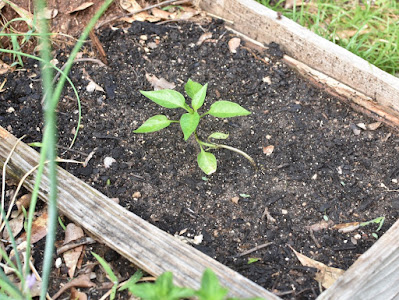
A couple of weeks ago I planted the pepper seedlings I had started from seed. They were a little slow going this year. I started them around the 1st of March, but even by late April I wasn't sure they were ready to transplant yet. Then I realized I didn't have enough pots or potting soil, so I had to make a supplies run (and figure out curbside shopping). But they're finally planted.


My husband loves peppers and experimenting with different ways of using them. In addition to cooking with them, he has also pickled them and made his own hot sauce. Most winters I hand him the seed catalog and let him pick out what varieties of peppers he wants me to grow that year. Usually it's jalapeno peppers and then something weird. This year's seeds ended up being 'Mellow Star' Shishito peppers and a jalapeno variety called 'Jedi'. (He's a Star Wars fan. I had to.)


We've found from experience that hot peppers really thrive in large pots. Jalapenos, especially, love heat and sunshine. We've also learned that deer love pepper plants. So I started planting a large pot of each pepper variety and putting them out near the vegetable beds where they get lots of sun (but are more vulnerable to deer). The I plant a pot of each close to the house where they don't get as much sun (but where the deer will definitely leave them alone). That way, I'm guaranteed some measure of success.


What little I could find on growing Shishito peppers suggested that they are used to cooler climates. I fear they won't tolerate our long, hot summers like jalapenos do. My vegetable and herb beds were pretty much full, but I found one space near the chives where I could make room for a Shishito pepper plant. Since the soil would be cooler in the ground, I am curious to see if that plant does any better than the ones in the pots. What can I say--the scientist in me is always collecting data.

In addition to peppers, I also started basil from seed this year. I had a ton of old basil seeds of various varieties from previous years--some as much as 5 years old. The germination rate goes down the longer they sit around, so I wasn't sure how many plants I would actually get. But I decided to clean out my seeds and just plant ALL of the basil seeds and see what happened. I ended up with a few more plants than I knew what to do with. I finally cleared a spot near the chives to plant a few, and just potted up the rest in small nursery pots I had, to either keep or give away.


Meanwhile...boy have the other vegetables grown! The potatoes, especially, have kind of taken over.

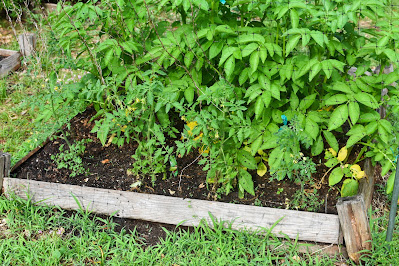
Left to right: tomatoes, potatoes, bell peppers (somewhere under the potatoes), asparagus

The asparagus continues to send up new shoots every few weeks!

My tomatoes are still managing to grow while competing for space with the potatoes.

I even have baby cherry tomatoes.

And a baby zucchini! Look closely under the giant yellow flower.

Not all of my veggies have thrived this year though. I got a few tiny radishes, but maybe only half of them got large enough to even think about eating. Most of them were on the skinny side. The ones I did pick took about 5 weeks or so to mature. I picked the last of them over the weekend since the heat was setting in.

This radish was the roundest of all them--and the pinkest.

My bush beans have also been a struggle this year. About a third of the plants were eaten from the roots up and killed entirely by something tunneling. The internet tells me I have all the signs of voles, though I haven't seen them in person. The deer found the rest of the plants, and I discovered this scene one morning a couple of weeks ago:


I didn't think the fence would actually make a difference, or that deer would bother to walk through an open gate. (Our fence is not that tall. Larger deer can jump over if they really want to.) The fact that the bean plants got eaten after I left the gate open one night probably isn't a coincidence, though. I didn't give up on my beans entirely. I kept watering the leafless stalks to see what they would do, and over time they grew some leaves. They're stunted and will never be the same, but I did find a few small beans today!


All I can say is, I am thankful I am not actually dependent on my garden to feed my family. The world hasn't ended yet, and I can still find food at the grocery store. Anything I can harvest this summer will just be icing on the cake.

Thursday, May 7, 2020

Back to the Cottage Garden

While I've spent a lot of time on my vegetables this spring, the thing that really got me into gardening was the ornamental part of gardening. I love the beauty of gardens--from the flowers to the shrubs.

If you read some of my old posts, you'll see I spent a lot of time planting shrubs and perennials during those first couple of years in our house. I wanted a cottage garden look fitting of our English-style cottage. Since they come back year after year, they don't need quite as much attention as the vegetables, but they still need upkeep from time to time.

I spent much of my last two weekends working on some of the flower beds. I started on the rose bed in the very front. I planted two lavender plants there back in 2013. One of them died last year (or so I thought), so I bought another one. When I started cleaning out that bed though, I found that the lavender plant had started growing back from the nub that was left. I planted he new one in there anyways, hoping to fill out the bed a little more in between the two.

I thought this lavender plant was dead, and cut it back to a nub. It rewarded me with new growth this spring. Now I just need to keep the oregano from taking over.

I tucked the lavender plant I just bought back between the two old lavenders.

A side note about lavender. French lavender is notoriously hard to grow in most of the Southeast. It doesn't like our heat and humidity. If anyone wants to grow lavender here in Georgia, I recommend Spanish lavender--it tolerates the humidity much better. But I liked the look of French lavender better, and somehow, seven years later, it's still alive. I swear I found the right variety and the right location. I bought 'Munstead,' a dwarf lavender variety, from my favorite local nursery. I planted it against a retaining wall along the sidewalk, so it gets plenty of sunshine, good air circulation, and good drainage. The other secret: I water it as little as possible. Most of what it gets is rainfall and whatever runs down the hill. During the hot summer months, I'll water on particularly dry weeks. Somehow that formula has worked.

Lavender with the roses
In my garden I mostly tend to stick to perennials and shrubs, since they're a gift that keeps on giving. However I have a couple of spots in the front where I'll rotate through annual flowers to get an extra splash of color, and I'll usually plant a few in pots, as well. For this summer, I decided on lime green coleus, white fan flower, and this Calibrachoa whose color I just couldn't resist.


'Colorblaze Lime Time' Coleus

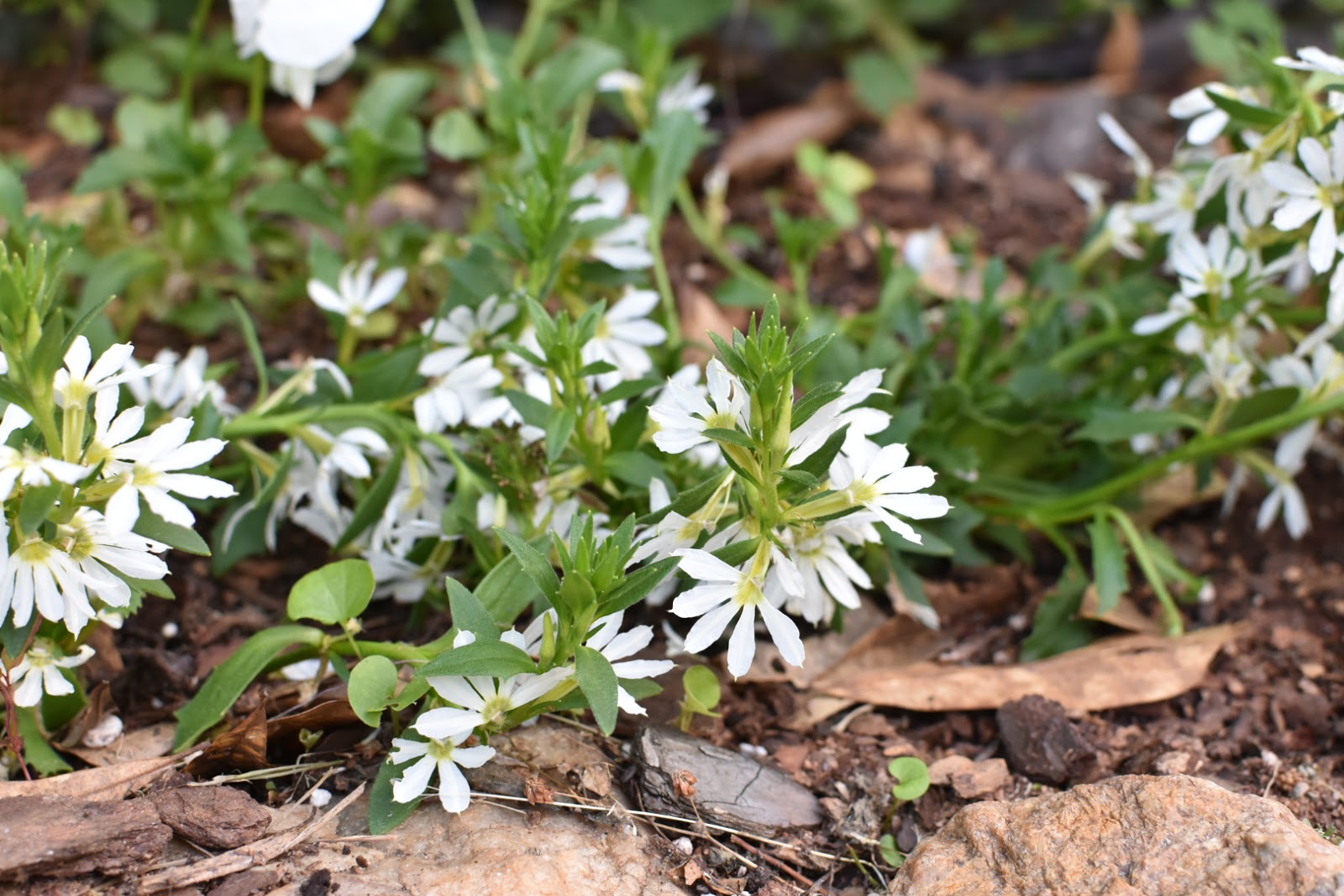
'Whirlwind White' Scaevola - also known as fan flower. I liked the upright growth habit of this hybrid.

'Superbells Holy Moly!' Calibrachoa
I find it hard to find flowers that will stay beautiful through our scorching summers, but I had good experience with coleus and fan flower in the past. Both manage to still look healthy in July and August. The calibrachoa was more of a toss up. Fingers crossed that it makes it. I also changed out one of my planters with a coleus and fan flower, plus this fuschia ivy leaf geranium I loved. Maybe it's because I spent so much time in Florida's Palm Beaches, but I think lime green and hot pink is a great summer color combination.


It's going to be good year for my roses. I never got around to giving them their annual pruning or fertilizer, but they look as happy as can be at the moment. I think it was because of all the rain we got this winter/spring. They just soaked it up and gave them a nice healthy start to the year. Even when plants look dormant, they're still "growing," it just looks different.

'Soaring Spirits' is looking particularly healthy this year.
Well, my work on the flower beds is far from over, so more on that soon!

Wednesday, April 22, 2020

Fighting entropy

Gardens are a lot of work. And mine, in particular, is continually attempting to return itself to something like a forest. A weedy forest. Cute wooden structures break down over time, and tree seedlings quickly threaten to take their place.

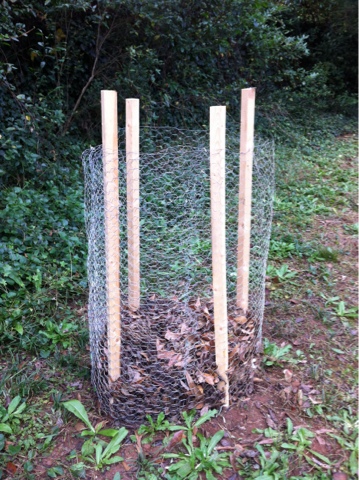
The compost bin my husband and I built in 2012 is still standing, amazingly. It leans a little bit, and the wooden posts are turning into compost, but the chicken wire cylinder is still upright and full of compost. I add all of our fruit and vegetable scraps to it regularly, as well as leaves from our yard when I start to clean up the garden every spring.

The compost bin in 2012
The compost bin in 2020.
Besides that, though, it's been a little neglected. Sure, if you're a dedicated composter, you'll turn your compost pile regularly with a shovel or pitchfork. But I'm lazy, and not really in a hurry. And, as I said, nature still will break things down over time, whether or not you turn your pile. It just takes a little longer. Since I did so little gardening last year, I didn't have much need for compost. Even when I am gardening, I probably produce more compost than I have use for.

So over time, all that rich, mature compost just sat at the bottom of the pile. I needed more soil to pile up over my potatoes, so I decided to substitute my compost in pinch. It's something in between soil and mulch, so I hoped it would serve the purpose well. When I tried to pull some out from the compost bin, though, I found something like tree roots had made themselves at home there. It was clear my compost was overdue for some attention. So I lifted up the chicken wire and went to town pulling out thick roots of all kinds. After that I took a shovel to the top and tried to break up and stir up the leaves and twigs I had added. It should be much happier now.

It looked like a tree was trying to grow UNDER the compost?

And more roots in the compost pile....

Much better!

Roots aside, I was still able to get two buckets of compost out of my pile, and covered up my potatoes as best as I could.

My compost is somewhere in between soil and mulch.


My little potato hill after adding compost to my potatoes

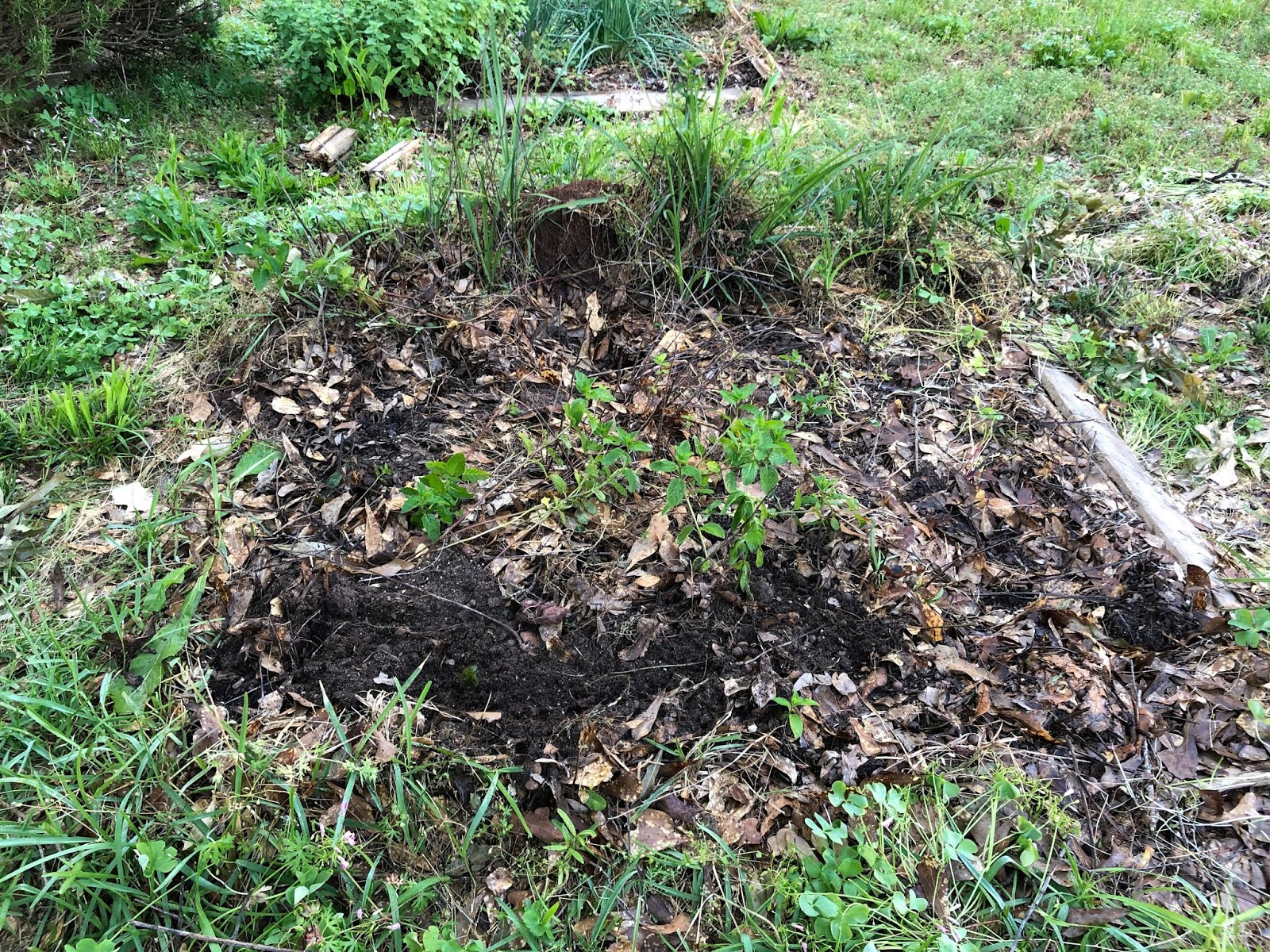
My next project was the mint bed. I wish I had gotten a before photo, but frequently I just notice things and start working on them and then only think about getting a photo when I'm halfway through. Basically, it didn't look like a mint bed anymore. It was mostly oak seedlings, oxalis, and other weeds. I was amazed to discover there was actually still mint growing in there when I looked closely.

This once was a raised bed full of spearmint...halfway done removing the weeds.
I thought I would just mow the whole thing down, but I was afraid the tree seedlings would find a way to grow back. (Also, there's a large ant pile living in there.) Since there actually was some mint in there, too, I decided to take a more surgical approach. I pulled up the oxalis by hand and used a shovel to dig up every tree seedling. With the mint roots being much more shallow than the oak roots, I thought it might survive the process. (And if not, oh well--I was ready to give up on all of it anyways.) When I finished, I gave the mint a good watering to help it through the trauma.

It's not pretty, but weeds are gone! Don't let that mint fool you--it could fill that entire bed by the end of the summer.
Weeds aren't the only thing flourishing in my garden, though! Can you believe how much my potatoes have grown since my last post? And my potatoes in the grow bag have grown into a small shrub! Even the chives are flowering this week.

Left to right: tomatoes, potatoes, bell peppers, asaparagus

Potato bush
Chives in bloom

Monday, April 13, 2020

Planting complete...for now

In spite of the pollen trying to kill me, I finally finished planting my vegetable beds over the past two weekends.

Left to right: tomatoes, potatoes, bell peppers, asparagus


The first weekend, all I had the energy for was to plant one lone zucchini plant (it's there next to the strawberry plant in front of the beans). I fortified my defenses against the allergies and planted the bell pepper plants a few days later. This past weekend I planted the tomatoes and two more rows of beans.

By the way, I know the wood around our raised beds is kind of falling apart, please don't judge. We had grand plans to redo them and make them sturdier this year, but that was before we had to limit our shopping trips and stay home due to a pandemic. So this year's motto is reuse and make do. The plants don't mind and still grow just fine.

The potatoes I planted in the ground finally got tall enough for me to cover them up--which meant I could move the pile of dirt back into the potato row, making room to plant the tomatoes.


The potatoes had gotten quite weedy--I must have established my beds at the perfect time for all that weed grass seed to sprout--but it was okay since I was going to be piling six inches of soil on top of the weeds. Potatoes live, weeds die. Problem solved!


I planted two varieties of tomatoes. I kind of lost my mind when I went plant shopping this year. I planted two of a cherry tomato variety called 'Sweet Million' that I've pretty sure I've grown in the past. The upside of cherry tomatoes is that they're very prolific and seem to get very few diseases or pests. The downside is that the plants get HUGE. If you had something tall enough for them to climb, they would get nine feet tall. I planted them on the ends of the row so they would have more room to spread out, and planted two 'Cherokee Purple' tomatoes in between. The upside of Cherokee Purple tomatoes (an heirloom variety) is that they are DELICIOUS. I love all fresh tomatoes, but Cherokee Purple is probably my current favorite for flavor. The downside is that they tend to get diseases and insects in my garden, so I don't get to harvest very many. Hopefully the two varieties will balance each other out.


My beans sprouted this past week! They like all the rain we've been getting. It's easy to tell the two varieties apart--the purple bush beans, 'Royal Burgundy', have purple stems, while the yellow bush bean plants are completely green.


The radishes are getting bigger! They've graduated from little tiny seedlings to have real leaves. So far, so good.


I picked my first strawberry of spring. It was tiny but full of flavor!


One flower coming into bloom this week: my 'Sunset Cutie' gaillardia that I planted last spring. This perennial seems to bloom all the way from April to December here in Georgia. It's drought tolerant and attracts butterflies, so it's a winner in my garden.